
All services
52 services in 9 categories · all live now
What a paver patio costs in 2026 by size and material, where the money goes, how it is built, and what to ask so every quote compares fairly.
A 300 sq ft concrete paver patio typically costs $3,000–$7,500, with $4,500 the typical price, or about $10–$25 per sq ft installed.

A concrete paver patio typically costs $10–$25 per sq ft installed, so a 300 sq ft patio lands around $3,000–$7,500 with about $4,500 typical. Most of that price is not the pavers themselves: excavation, a compacted gravel base, bedding sand, edge restraint and labor make up the bulk of the bill.
That is why two quotes for the same size can be thousands apart. A cheaper bid often means a thinner base, which is the main reason paver patios sink or shift. Use the sections below to see the price by size, what pushes it up, how materials compare and what to ask before you sign.
Installed price for basic concrete pavers at the national range of $10–$25 per sq ft, with $15 typical. Small patios often cost more per foot because setup and minimum charges are spread over less area.
Calculated from our national per-sq-ft range (compared with HomeGuide, Oct 2026). Natural stone, steep or hard-to-reach yards and demolition of an old patio cost more.
National ranges, installed. Your city can run 10–20% either way.
Source: National cost guides (HomeGuide, Angi, HomeAdvisor), compared Oct 2026.
Six things move a paver quote more than anything else. Ask every contractor to price them as separate lines.
Basic concrete pavers cost the least. Brick, natural stone like bluestone or travertine, and porcelain pavers raise the material price, sometimes doubling the total.
A patio needs about 4–6 in of compacted crushed stone, more on clay or wet soil. Digging out and hauling away soil is labor-heavy and is where cheap bids cut corners.
Larger patios cost less per sq ft. Curves, circles, steps and multiple levels mean more cutting and waste, often 10–15% extra material.
Running bond and stack bond are the quickest to lay. Herringbone and circular patterns take longer and waste more pavers, so they cost more.
If equipment cannot reach the backyard, materials are moved by hand. Removing an old concrete slab or deck adds demolition and disposal.
Edge restraint is required on open edges. Polymeric joint sand, sealing ($1–$3 per sq ft), seat walls, fire pits and lighting all add to the total.
On a professional install, labor is usually about half the bill. The pavers themselves are often the smaller share; digging, base work and laying take the time.
Source: LawnStarter and Lawn Love paver cost guides; sealing from Lawn Love (compared Oct 2026).
DIY can save most of the labor share, roughly half the price, but it is heavy work: digging 7–9 in deep, hauling soil, renting a plate compactor and a wet saw, and compacting the base in lifts.
Most paver failures, such as sinking, rocking pavers and weeds in wide joints, come from a thin or poorly compacted base. If you are not confident about the base, hiring a pro for the excavation and base and laying the pavers yourself is a middle option some contractors offer.
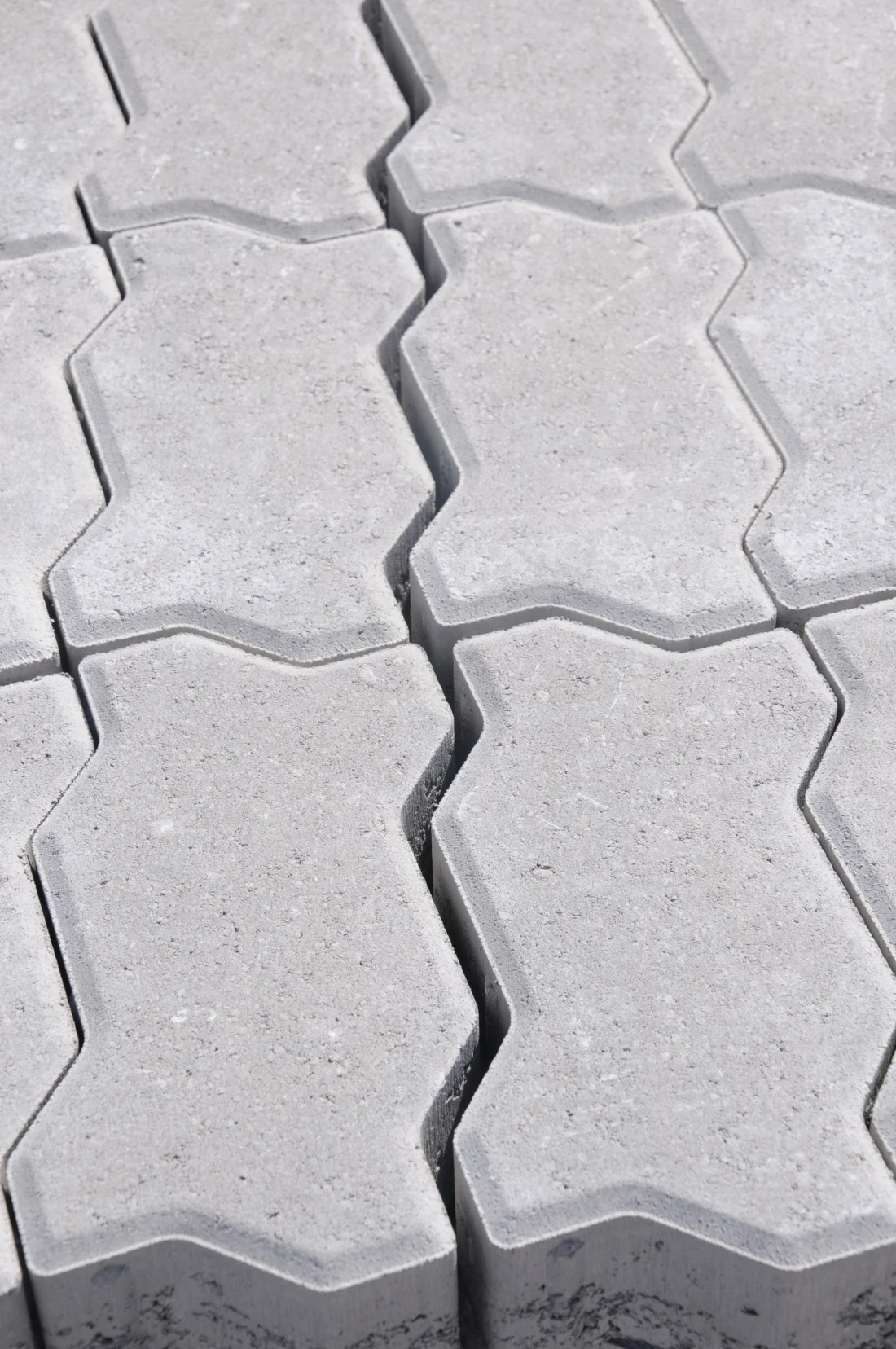
Installed prices by material. Concrete pavers are the most common choice for patios because they balance cost, color options and easy repair.
Source: HomeGuide patio and flagstone cost guides; porcelain from Lawn Love (compared Oct 2026).
All three can make a good patio. The right one depends on budget, how much you want the look to last, and your soil.
Prices are national ranges (HomeGuide patio and stamped concrete guides, compared Oct 2026). See concrete costs for slab and stamped prices, or price both side by side with the driveway & patio cost estimator.
Knowing the steps helps you compare quotes, because each one should appear in the scope of work.
The area is laid out with paint or string, and underground utilities are marked before digging.
Soil is removed to the depth of base plus sand plus paver, usually about 7–9 in for a patio, with a slight slope away from the house for drainage.
Crushed stone goes down in 2 in lifts, each compacted with a plate compactor, until it reaches about 4–6 in.
A 1 in layer of coarse concrete sand is leveled with screed rails. It is never used to fix a low spot in the base.
Pavers are set in the chosen pattern and cut to fit at the edges with a wet saw or splitter.
Plastic, metal or concrete edging is spiked along every open edge so the field cannot creep outward.
Polymeric sand is swept in and the surface is compacted again, then misted so the sand locks in place.

Detailed cost guides for each job are being written; the tools above already price them.
Checked against the official source on Oct 28, 2026. General information, not legal advice.
A 300 sq ft concrete paver patio typically costs $3,000–$7,500 nationally, with $4,500 the typical price, or about $10–$25 per sq ft installed (checked Oct 2026). Price your size with the driveway & patio cost estimator.
Plain concrete costs less up front: about $6–$15 per sq ft for a driveway against $10–$25 for a paver patio in our national ranges. Pavers can be lifted and relaid, and a cracked paver is swapped instead of the whole slab. See concrete prices.
Multiply length by width for square feet, add waste (5% straight, 10% herringbone, 15% curves), then divide by one paver’s face area. A 4 × 8 in paver needs 4.5 per square foot before waste. The paver calculator does the math.
About 4 in for walkways, 4–6 in for patios and 8–12 in for driveways, more on clay or poorly drained soil. Compact the base in 2 in lifts.
Yes, on every edge that is not held by a wall or slab. Without it, pavers creep outward and the joints open up.
Most 200–400 sq ft patios take 2–5 days once work starts, depending on excavation, access and weather. Curing time is not needed, so you can use the patio as soon as the joint sand is set.
Sealing is optional. It deepens color, resists stains and helps lock joint sand, and typically costs $1–$3 per sq ft. Many owners reseal every few years.
Sometimes. A sound, well-drained slab can take thin overlay pavers set in a bedding layer. A cracked, heaving or poorly sloped slab should be removed first, or the problems will show through.
They let rain drain through the joints into a deeper stone base, which can reduce puddles and runoff. They make sense where drainage is poor or local rules limit hard surfaces, and cost about $8–$30 per sq ft.