
All services
52 services in 9 categories · all live now
What duct cleaning and ductwork replacement cost in 2026, which problems are worth fixing, and why a sealed system matters more than a cheap cleaning.
Whole-home duct cleaning costs $450 to $1,000, and ductwork replacement runs $4,000 to $20,000 depending on access. Cleaning runs $25 to $50 per supply vent.
Whole-home duct cleaning costs $450 to $1,000, or about $25 to $50 per supply vent. Ductwork replacement runs $4,000 to $12,000 when the ducts are accessible and $8,000 to $20,000 when they run inside finished walls. The gap is access, not equipment, because opening and patching walls is finish work.
Two bids for the same house can differ by thousands. One may clean the supply vents and stop, another may clean supply and return, sanitize, seal leaks and verify airflow. Ask what is cleaned, what is sealed and how the crew confirms the system is moving the right amount of air before you compare totals.
Ranges use the national rate of $25 to $50 per supply vent, which is how many duct cleaners price a whole-home job. Return vents cost more per vent, and larger homes have more of both.
Calculated from the HomeGuide per-vent rate and compared in Oct 2026. Most jobs in that table fall between 12 and 20 vents, and ductwork replacement is priced per job, not per vent.
National ranges, installed. Your city can run 10 to 20 percent either way, so check the local pages before you compare quotes.
HomeGuide air duct cleaning and ductwork replacement cost guides, compared Oct 2026.
Six things move a duct quote more than anything else. Ask the contractor to list each one in the scope, so the bids you compare describe the same work.
Cleaning is priced by vent or by square footage, at $25 to $50 per supply vent. A 1,200 sq ft home runs $240 to $480, while a 3,000 sq ft home runs $600 to $1,200 for the same scope.
Replacing ducts in a basement runs $1,800 to $3,100, an attic $2,200 to $5,600 and a crawl space $3,000 to $7,300. Ducts inside finished walls cost more because drywall comes out and goes back.
Rigid metal ductwork costs $25 to $55 per linear foot to replace, while flexible runs are cheaper per foot but easier to crush. Crushed, disconnected or wet insulated ducts cannot be cleaned back to safe condition.
Light dust is a standard cleaning. Mold, rodent droppings or heavy debris need HEPA vacuuming and sanitizing, which adds $70 to $150 or more. Replacing contaminated ductwork is sometimes cheaper than cleaning it.
Air duct sealing runs $1,000 to $6,000 and closes the leaks that waste cooled air. Insulating ducts in an attic or crawl space keeps the air at the right temperature before it reaches the room.
Duct crews charge $90 to $125 per hour, and an inspection runs $80 to $180. Dryer vent cleaning adds $80 to $250, and an HVAC or mold problem found during the job adds another scope.
Cleaning is almost all labor and equipment, while replacement is labor plus sheet metal and insulation. HomeGuide puts duct cleaning labor at $90 to $125 per hour for a two-person crew that spends two to four hours on a whole home.
HomeGuide air duct cleaning and ductwork replacement guides, labor and service tables, Oct 2026.
You can and should handle the parts of duct care that do not require opening the system. Change the filter on schedule, vacuum the registers and return grilles, keep furniture and rugs from blocking airflow, and check that supply vents are open. Those habits do more for indoor air quality than a cheap one-time cleaning.
Do not rent a brush and feed it into your ductwork. Flexible ducts crush easily, insulation tears, and a dislodged joint can leak air into a wall cavity. Cleaning a whole system takes a HEPA vacuum, negative pressure and the right brushes, and a failed attempt can create more dust than it removes.
Installed cost to replace ducts by where they run. The duct material is similar across rows, so the number mostly reflects access, labor hours and how much finish work is needed afterward.
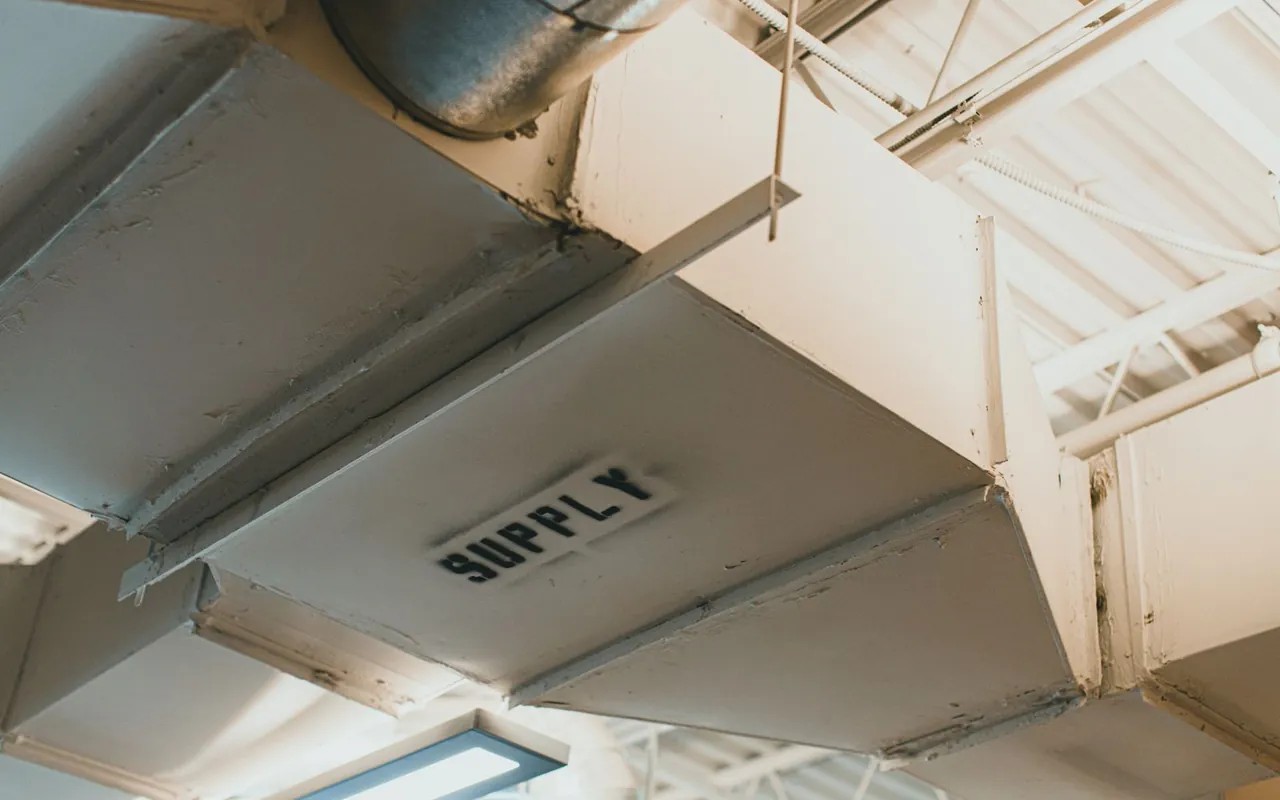
HomeGuide ductwork replacement cost guide by location, compared Oct 2026.
All three can improve airflow, but they fix different problems. Cleaning removes what is inside, sealing closes the leaks, and replacement is the answer when the ducts themselves are damaged.
Get an inspection before paying for a cleaning, and ask for airflow readings before and after. Use our repair or replace tool when the ducts are old, and send a job brief that lists the home size, vent count and any rooms that never feel comfortable.
The sequence below is what a careful crew does. If a quote skips the inspection or the airflow check, you are paying for work that may not be needed or cannot be verified.
The crew checks the system layout, opens a few vents and reads airflow before recommending cleaning, sealing or replacement.
Furniture and floors are covered, and a HEPA vacuum pulls the work area into negative pressure so dust stays in the ducts.
Rotary brushes and air whips travel each run, and the HEPA vacuum captures the loosened dust at the same time.
Ductwork with mold or rodent contamination is sanitized with an approved product after the debris is removed.
Mastic or aerosol sealant closes gaps at joints, boots and the plenum so cooled air reaches the rooms instead of the attic.
Ducts in attics and crawl spaces get insulation and a vapor barrier to prevent condensation and heat gain.
Registers go back on, airflow is measured again, and the crew shows you the before and after readings plus the filter condition.
Detailed cost guides for each job are being written; the tools above price every one of them today.
Checked against the official source on Oct 28, 2026. General information, not legal advice. Duct Services work is regulated by permit, and by state license for some trades.
Whole-home duct cleaning costs $450 to $1,000, or about $25 to $50 per supply vent. Homes under 1,500 square feet often land near $300 to $600, while larger homes with more vents run $600 to $1,200. Returns, sanitizing and dryer vent cleaning add to the bill.
Ductwork replacement runs $4,000 to $12,000 when the ducts are accessible, and $8,000 to $20,000 when they run inside finished walls. Per linear foot, replacement is $25 to $55. Access, the number of runs and how much drywall has to be opened drive the final number.
Most homes do not need it on a schedule. Cleaning makes sense when you see mold or debris at the vents, when rodents have been in the system, when airflow is weak, or after a renovation. Ask for an inspection with airflow readings before agreeing to a whole-home cleaning.
There is no fixed schedule that fits every home. Many contractors suggest every three to five years for a typical house, and sooner if you have pets, allergies, recent water damage or a renovation. Visible debris, musty odors and weak airflow are better signals than a calendar.
It can help when the ducts are the source of the dust, mold or dander reaching your rooms. Cleaning does not fix a leaky or undersized system, and it will not help if the filter is wrong or the returns are blocked. Fix those first, then decide whether cleaning is worth the cost.
Cleaning removes dust and debris from inside the ducts. Sealing closes the leaks at joints, boots and the plenum so conditioned air stays in the system. Sealing runs $1,000 to $6,000 and does more for energy bills, while cleaning does more for indoor air quality.
Ducts inside finished walls require opening drywall or plaster, removing the old run, installing the new duct and then patching and painting. That finish work is why the price runs $8,000 to $20,000 instead of $4,000 to $12,000 for accessible ducts. Get a scope that lists every wall opening.
Repair or seal ducts that are sound but leaky, typically for $1,000 to $6,000. Replace ducts that are crushed, disconnected, wet, moldy or undersized for the system. A replacement runs $4,000 to $20,000, so get an airflow test and a written scope before deciding.
Ask for a license, insurance and references, and confirm the crew uses a HEPA vacuum and negative pressure. Request a written vent count and a price per vent. Be wary of advertised specials that add fees, and insist on before and after airflow readings before paying.